Balancing Corporate & Homesteading Lifestyles
The Kikiriki Chronicles: Meet the Kikiriki
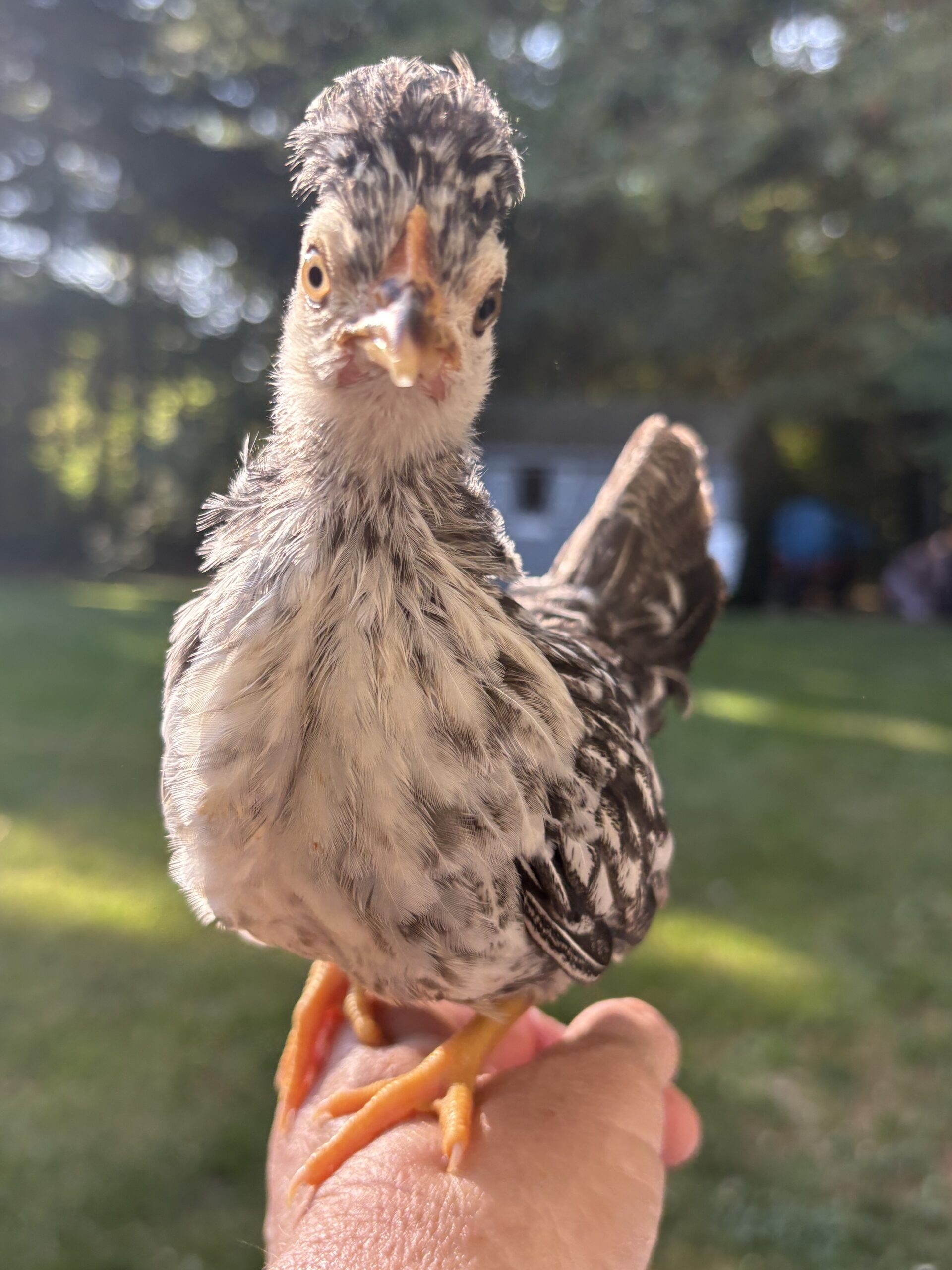
If you've been following Tammi's Pocket Flock for any length of time, you already know I have a soft spot for tiny chickens. And when I say tiny, I mean chickens that can practically fit in the palm of your hand but somehow manage to have the confidence of a rooster ten times their size!
Welcome to the wonderful, sometimes confusing, and always interesting world of Kikirikis.
If you're new to Kikis, you're probably wondering what makes them different from other bantam chickens. And if you've already started raising or breeding them, you've likely discovered something else: these little birds can produce some very unexpected surprises in the incubator.
That's exactly why I wanted to start this series.
We're going to explore the Kikiriki from the beginning, look at some of the different varieties, and get into the genetics behind those unusual feathers, body shapes, colors, and other characteristics.
I also want to talk about responsible breeding, because there's a lot more to producing healthy, beautiful chicks than simply putting a rooster and hen together and hoping for the best.
And believe me, the more I work with these little birds, the more questions I have!
So, What Exactly Is a Kikiriki?
Kikirikis are very small ornamental chickens associated with Puerto Rico. They're commonly described as micro-bantams or teacup chickens, and their tiny stature is part of what makes them so appealing.
But size isn't the whole story.
Kikirikis are known for their upright posture, lively personalities, and remarkable variety of physical characteristics.
Some have smooth feathers. Some have unusual head shapes. Others have crests, featherless necks, beards, or no visible tail.
You can have two Kikirikis standing side by side that look almost like completely different types of chickens.
And that's where things start getting interesting.
Unlike breeds with a well-established exhibition standard, Kikirikis have developed largely through regional breeding traditions and dedicated breeders selecting for particular characteristics.
There isn't one universally established breed standard defining every acceptable characteristic.
That means the birds you see from one breeding program may look quite different from those produced by another.
It's also why understanding the genetics behind these characteristics is so important.
Where Did Kikirikis Come From?
The Kikiriki is closely associated with Puerto Rican poultry breeding traditions.
Breeder histories describe the development of these tiny chickens through selective breeding involving ornamental bantam lines.
Old English Game Bantams and Japanese Bantams are frequently mentioned in accounts of their early development. Some breeder histories also describe later influences from Seramas and Sebrights.
These accounts help explain the combination of small size, upright posture, short-legged appearance, and colorful feather patterns found in many Kikirikis today.
However, the complete genetic history of the Kikiriki hasn't been established through published breed-wide genetic research. Different breeding families may also have different ancestry.
This distinction matters.
When we talk about Kikiriki genetics, we can draw on established research involving chickens generally, but we shouldn't automatically assume that every Kikiriki carries the same genes or shares the same breeding history.
For breeders, individual bloodlines matter.
Are Kikirikis the Same as Seramas?
This is probably one of the first questions people ask.
They're both tiny, both have big personalities, and some Kikirikis resemble Seramas closely enough that they're easily confused.
But they're not simply two names for the same chicken.
Seramas originated in Malaysia and have their own documented development and exhibition traditions.
Kikirikis are associated with Puerto Rico and have a different regional breeding history.
Some Kikiriki lines may have Serama ancestry, but that doesn't make every Kikiriki a Serama.
One thing I find especially interesting is the variety in Kikiriki appearance. While Serama breeders often select for a particular upright body style, Kikiriki breeders may be working toward several different physical characteristics.
Both can be wonderful little birds, but when it comes to breeding, understanding what you're working with is far more useful than relying on appearance alone.
The Many Faces of the Kikiriki
Here's where the fun really begins.
Spend a little time looking through Kikiriki breeding groups, and you'll start hearing names that might be completely unfamiliar if you've only raised traditional chicken breeds.
Some of these names describe feather characteristics. Others refer to body structure or the absence of particular features.
Let's look at a few.
Traditional or Smooth-Feathered Kikirikis
These are the little Kikis with normally structured feathers lying relatively flat against the body.
They may come in a wide variety of colors and patterns, with differences in combs, leg length, and body structure.
A smooth-feathered Kikiriki can still carry genetic variations affecting other traits, even when those traits aren't obvious from its appearance.
Frizzle Kikirikis
Frizzled chickens have feathers that curl outward rather than lying smoothly against the body.
That gives them a wonderfully unusual appearance, almost as if someone gave them a tiny feathered perm.
The frizzle trait is especially interesting because it demonstrates incomplete dominance.
In the familiar frizzle inheritance model, a chicken with one copy of the frizzle allele usually shows curled feathers. Two copies can produce a much more extreme and fragile feather condition often called frazzle.
This is an important consideration when selecting breeding pairs.
The term frizzle is sometimes used broadly in Kikiriki breeding circles, but not everyone agrees on whether frizzling belongs within traditional Puerto Rican Kikiriki lines. When discussing breeding projects, it's worth being transparent about ancestry and any outcrossing.
We'll spend an entire article discussing frizzle genetics, breeding combinations, and why breeding two visibly frizzled birds together deserves careful consideration.
Topis — The Crested Kikirikis
A Topi is a Kikiriki with a crest of feathers on its head.
Some have a relatively small tuft, while others have a much more noticeable arrangement of head feathers.
In chickens, feather crests are associated with genetic changes involving the HOXC gene region.
But a crest of feathers is not necessarily the same thing as a vaulted skull.
This distinction becomes especially important when we talk about Boneheads.
Bonehead Kikirikis
Now here's a subject I'm particularly interested in!
Bonehead is a term used by some Kikiriki breeders to describe birds with a pronounced, raised, dome-like head.
The term is commonly associated with vaulted-skull appearance.
I recently had a surprise in my own incubator when two Kikiriki chicks hatched from the same rooster's breeding group. One had an ordinary-looking head, while the other had a very noticeable raised dome.
I certainly wasn't expecting that!
But one unexpected chick doesn't tell us exactly how the trait is inherited.
Research involving crested Polish chickens has connected certain vaulted-skull abnormalities with genes involved in crest development. Some forms of severe cranial vaulting have also been associated with incomplete skull closure.
We don't yet have enough Kikiriki-specific research to say that every breeder-described Bonehead follows the same inheritance pattern.
It's something I want to explore carefully, both from a genetics standpoint and from the perspective of the bird's health and welfare.
After all, an unusual trait may be fascinating, but our first responsibility is always to the chicken.
Naked Neck Kikirikis
Some Kikirikis develop with significantly reduced feathering around their necks.
Breeders may refer to birds with partial neck feathering as Bowties and those with a more completely bare neck as Strippers.
The naked-neck trait has been studied in chickens and is associated with a dominant genetic variant commonly represented by Na.
Birds with one copy can have more neck feathering than birds with two copies, although appearance can also be influenced by other factors.
So when two naked-neck birds are bred together, the resulting chicks may not all have the same amount of feather coverage.
This is one of the reasons genetics is so much fun to study.
A trait can look fairly straightforward until you start examining the different combinations inherited by the chicks.
Bolo — The Rumpless Kikiriki
Another fascinating type is the Bolo, a term used for Kikirikis that appear to lack the usual tail structure.
In chickens, rumplessness can involve developmental differences affecting the tail vertebrae and surrounding structures.
However, not every bird with a missing or reduced tail necessarily has the same genetic condition.
A naturally rumpless bird is also different from a chicken that simply has damaged, missing, or undeveloped tail feathers.
We'll take a closer look at these distinctions and what breeders should evaluate before making assumptions about inheritance.
Lionfaces and Other Distinctive Characteristics
Some breeders use the term Lionface for Kikirikis with prominent facial feathering, such as beards and muffs.
Other birds are selected for particular feather patterns, leg characteristics, head shapes, or combinations of traits.
That's part of what makes Kikiriki breeding so fascinating.
But it's also a reminder that breeder names describe appearances. They don't always tell us the exact genetic makeup of a bird.
Why Genetics Matter So Much in Kikiriki Breeding
Let's talk about what happens when you put two chickens together.
It's easy to look at a rooster and hen and imagine that the chicks will simply be a mixture of their parents.
Sometimes that's exactly what seems to happen.
Other times, you open the incubator and wonder where on earth a particular chick came from!
That's because each chick inherits genetic information from both parents, and not every inherited trait is visible in the parent carrying it.
Some characteristics are controlled largely by a single gene.
Others involve several genes working together.
Some are dominant, some are recessive, and some show incomplete dominance.
Environmental factors and developmental conditions can also influence the final appearance of a chicken.
Let's break down a few important terms.
Dominant Traits
A dominant allele can affect a bird's appearance when only one copy is present.
For example, the naked-neck trait is commonly described as dominant, although the amount of feather reduction can differ between birds carrying one copy and those carrying two.
Dominant doesn't mean better, stronger, healthier, or more desirable.
It simply describes how a genetic variant is expressed.
Recessive Traits
A recessive characteristic generally requires two copies of the relevant allele before it becomes visible.
This means a rooster and hen can both appear completely ordinary while carrying a recessive variant.
If both pass that variant to a chick, the characteristic may suddenly appear.
That's one reason understanding a breeding line is so valuable.
What you see in the parents isn't always the whole genetic story.
Incomplete Dominance
Incomplete dominance means that having one copy of an allele produces a different appearance from having two copies.
Frizzling is a well-known example.
A chicken with one copy of the common frizzle allele typically has curled feathers, while a bird with two copies may develop much more extreme feather abnormalities.
This distinction can have real consequences for the bird.
Knowing the difference isn't just useful for predicting how chicks might look. It's part of making responsible breeding decisions.
Traits Controlled by Multiple Genes
Not everything fits neatly into a simple dominant or recessive category.
Body size is a good example.
When we're selecting Kikirikis for very small stature, we're dealing with a complex characteristic influenced by multiple genes, growth, nutrition, and development.
Two very tiny birds won't necessarily produce an entire hatch of equally tiny offspring.
And selecting only for the smallest possible size without considering health and structure can create problems.
The same general principle applies to many feather colors, patterns, and aspects of body type.
The Importance of Knowing Your Breeding Lines
One of the biggest lessons I've learned from breeding chickens is that good records are worth their weight in gold.
You may think you'll remember which rooster produced a particular chick or which hen laid a certain egg.
And then you have several hatches, a few unexpected colors, an unusual feather type, and suddenly you're trying to remember who was paired with whom three months ago!
That's when those records become incredibly useful.
For my own flock, I like keeping track of parentage when known, hatch dates, colors, feather characteristics, and how the chicks develop.
DNA sexing is another tool I use with my babies, although sex testing doesn't tell us which feather or structural genes a chick carries.
I also believe in documenting the unexpected.
If a chick hatches with a trait I haven't seen before, I want to know whether it shows up again, which breeding pair produced it, and how that chick develops over time.
Over several generations, those observations can reveal patterns that a single hatch never could.
This is especially valuable when working with birds that have diverse breeding backgrounds.
Breeding for Appearance Versus Breeding for Health
I love unusual chickens.
Frizzles, crests, tiny bantams, oddball feather patterns, and those little personalities that seem far too big for their bodies.
But I also believe there needs to be a balance between producing interesting-looking birds and producing healthy ones.
Just because we can select for a characteristic doesn't necessarily mean we should keep pushing it further.
An extreme trait may create additional welfare concerns.
For example, very fragile frizzled feathers can provide less protection from the weather. Certain vaulted-skull abnormalities may make a chicken more vulnerable to injury. And some inherited skeletal characteristics can affect embryo survival.
So when choosing breeding birds, appearance should never be the only consideration.
I also want to see good mobility, appropriate body condition, healthy feathering, normal behavior, and birds that can live comfortably in the environment we provide.
A tiny chicken isn't automatically a healthy chicken.
And a visually unusual chicken isn't automatically a good breeding candidate.
Good breeding requires looking at the entire bird.
Why Kikiriki Breeding Can Be So Unpredictable
Part of the challenge, and honestly part of the fascination, is that Kikiriki breeding lines can contain a wide variety of genetic traits.
When breeders combine birds with different backgrounds, the resulting chicks may reveal characteristics that weren't obvious in the parents.
That doesn't mean every unexpected feature is recessive or that every surprise can be explained with a simple genetic chart.
Sometimes multiple genes interact.
Sometimes the family history isn't complete.
And occasionally a physical difference may be developmental rather than an inherited trait.
That's why I think it's important to approach breeding with curiosity rather than certainty.
Make observations. Keep records. Research what is already known. And don't be afraid to say, "I don't know yet."
There is absolutely nothing wrong with learning as we go.
Where We're Going With This Series
Over the coming articles, we're going to get much deeper into the genetics of these little chickens.
We'll look at actual breeding combinations, discuss what happens when specific traits are paired, and work through some simple genetic charts.
We'll also explore why two birds that look alike can produce very different offspring and why two very different-looking birds might produce chicks that look surprisingly similar.
And because I'm raising and breeding Kikirikis myself, I'll share examples from the Pocket Flock along the way.
My goal isn't just to show you some adorable little chickens, although I can promise there will be plenty of those!
I want to help you understand what's happening behind the scenes, from the genes a chick inherits to the characteristics we see as it grows.
Whether you're considering your first Kikiriki, already have a few running around your yard, or are interested in developing your own breeding program, I hope you'll follow along.
These little birds may be tiny, but there's an enormous amount to learn about them.
And if there's one thing I've discovered, it's that a Kikiriki can still surprise you no matter how many chicks you've hatched!
So let's start learning what makes these tiny chickens so special.
— Weekend Homesteaders | Tammi's Pocket Flock
Have you ever hatched a chick that looked completely different from what you expected? I'd love to hear about it!